Thursday, 15 August 2013

Vancouver Technology Perspective

A great location, enviable West Coast lifestyle, thriving and vibrant tech community, jobs galore, above average wage increases, and a booming economy. It's no wonder global companies like Avigilon, Vision Critical, Global Relay, Microsoft, Electronic Arts, IBM, and SAP have offices here.
Vancouver is a place where the next tech generation is inspired, and supported successful entrepreneurs choose to live and work over anywhere else in the world. We’re also recognized for our environmental leadership and growing clean energy, and green tech sectors.
Whether you're into programming or marketing, building products or managing them, you'll want to be part of our talented community, working on the world’s next big technology breakthrough right here, in beautiful Vancouver, British Columbia.
 
Leading Sustainable Industries
 
Clean Technology 
The environmental mindset of Vancouver drives major public private investments, research and development making Vancouver a highly favorable place for sustainability-related industries.
The city has a large number of medium and small companies active in sustainability-related industries. Greater Vancouver area companies accounted for almost half of Canadian firms in
Deloitte’s “Technology Green 15 Companies” in 2007.
The hydrogen and fuel cell sector in B.C. is the largest in the world and represents 75 per cent of Canadian fuel cell and hydrogen-based research and development expenditures. Leading
innovators in hydrogen, fuel cell and natural gas engines, including Ballard Power, QuestAir Technologies and Westport Innovations, base their operations in the Greater Vancouver area.
 
Sustainable Urban Development
Vancouver architects and designers, like Holland Barr, Bing Thom, Peter Busby and Hotson Bakker, have worked on five continents creating eco-friendly buildings and communities.
Urban planners such as Larry Beasley are replicating the city’s environmental planning and design in cities like Houston, Dubai, Sao Paolo and Abu Dhabi. In the world of architecture and urban planning, “Vancouverism” has become shorthand for “sustainable urban development.”
 
 
Sources:


Skytrain and Public Transit in Vancouver

File:Skytrain composite.png


SkyTrain is a light rapid transit metro system in Greater Vancouver, British Columbia, Canada. SkyTrain has 68.7 km (42.7 mi) of track and uses fully automated trains on grade-separated tracks, running mostly on elevated guideways, which gives passengers views across the city and helps SkyTrain to hold consistently high (over 95%) on-time reliability. It also uses the world's longest cable-supported transit-only bridge, the Skybridge, to cross the Fraser River.
The system has a total of 47 stations on three lines. The Expo Line and Millennium Line are operated by British Columbia Rapid Transit Company under contract from
TransLink (originally BC Transit), a regional government transportation agency. The Canada Line is operated on the same principles by the private concessionaire ProTrans BC under contract to TransLink, and is an integrated part of the regional transport system.


The Vancouver trolleybus system forms part of the public transport network serving Metro Vancouver, in the province of British Columbia, Canada.
In operation since 1948, the system presently comprises 13 routes, and is managed by the Coast Mountain Bus Company, a subsidiary of TransLink. It uses a fleet of 262 trolleybuses, of which 74 are articulated vehicles.


Sources
http://www.translink.ca/
http://www.translink.ca/en/About-Us/Corporate-Overview/Operating-Companies/CMBC.aspx


Vancouver has become a hub of the North American gaming industry

                          " En route to Costco, I was phoned by John Doe for details on an upcoming
                            Tetris tournament, but we got side-tracked and ended up discussing work.
                             The big discussion around the office is how to alter BoasrdX's development"
                              Jpod, by Douglas Coupland

While Vancouver’s game-development industry may have had a modest start, it now includes about 75 companies that directly develop games, according to Kenton Low, president of New Media B.C. An additional 70 companies provide support services for game development, including animation and audio production. In all, approximately 3,500 people are working in the video-game industry in the Lower Mainland.
“Five years ago, that number was probably a couple of thousand,” Low told the Georgia Straight.
Vancouver’s video-game industry, which could be a central component of the future economy of the region, started, as these stories always seem to, with a couple of kids in a basement. The critical detail that’s often missing when the story of game development in the city is told, though, is the publisher of Evolution—Sydney Development Corporation. The brains behind Sydney Development, formed in 1978, belonged to Tarrnie Williams, who had spent 10 years working in Vancouver for IBM.


While all of this activity at MDA and MPR was happening in the late 80’s, a teenage son of Burnaby truck driver created a video game for the Apple II computer, called Evolution. Don Mattrick went on to build Distinctive Games until he sold to Electronic Arts in 1991. Seeing the potential of the creative class of film, TV and video production in Vancouver, EA made a big bet on a massive Vancouver studio, EA Canada. The single largest video game studio location in the world now operates in Burnaby, about 3 km from where Don mashed together his first game. The digital media industry is my pick for one of the sectors that emerges as a defining industry for Vancouver. From the dozens of video game studios operating in EA Canada’s shadow, Vancouver has also seen a tremendous rise in consumer focused Internet media. Exactly eight of the top eight Internet media companies in Canada by traffic are based in Vancouver, according to the Peer 1 Canada Start-Up Index. For some reason, the left coast has figured out how to attract millions of eyeballs to content on the Internet better than any other region. A couple more successful exits such as Super Rewards ($50 million) and Now Public ($25 million) in Internet media will spur further activity.
Hastings at Columbia, 1958 Fred Herzog. Equinox Gallery
 
The software industry has been difficult to establish with that large talent-sucking monster to the south in Redmond, WA. Yes, a small company called Microsoft is only a two hour drive away. Despite that challenge, Vancouver has been home to leading global software innovations like AccPac, Crystal Reports and Pivotal CRM. Crystal Decisions became Business Objects, which became SAP and still employs over 1,000 engineers and sales people locally. Emerging stars in software such as Elastic Path, Absolute Software and Faronics have benefitted from the critical mass of great software developers.

Sources:
http://www.straight.com/life/vancouvers-video-game-family-tree
http://www.cantechletter.com/2010/01/looking-for-a-leader-vancouvers-tech-history/
 

Thursday, 8 August 2013

Surrey: Healing the Black Eye with Innovation and Sustainability

"It was littered with rubbish: car parts, rusty bicycles, 
a dilapidated 1970s swing set, a Mr. Turtle pool 
filled with rainwater and leaves, and an old German
 shepherd who appeared equally defeated." (pg. 45)

- Everything Was Goodbye, By Gurjinder Basran

Over the years, Surrey has been known as a run down city of Metro Vancouver where shootings and gang violence are an every day occurrence. However, Surrey has taken a sharp turn. Its 6 cities have undergone major changes ranging from new amenities, condos, city centres and hospitals - earning the title of the second fastest growing city in Metro Vancouver. Not only has Surrey proven to be a city for innovation, it has also shown how a fast growing city can be sustainable and very green. 

One of Surrey's major projects is the half-billion dollar expansion of Surrey Memorial Hospital (SMH). It will house the second largest Emergency Department in Canada and top of the line technology. SMH is located within "Innovation Boulevard" alongside Simon Fraser University, and Surrey's City Centre. Innovation Boulevard contains a network of organizations, companies and people whose goal is to create a world class centre for health technology. For example, SFU is one of only two places in North America that offers a Mechatronic Systems Engineering (MSE) program. The research and projects from this program alone are responsible for various technology used in healthcare, ranging from the development of green energy to surgical robots. Collectively, the work of Innovation Boulevard will no doubt make Fraser Health one of the leading health authorities in B.C.


As Surrey continues to develop into a modern city with leading technology, it will still manage to stay green. According the the Sustainability Charter Progress Report, Surrey aims to be a "green" business leader and reduce fossil fuels while also being carbon neutral by 2058. The City plans on reaching this goal by intervening in the following indicators:


  1. Age of buildings: older buildings consume more energy and require more maintenance that can be hazardous to one's health (ie: asbestos). By keeping track of the age of buildings in Surrey, updates like retrofitting can be made to reduce the carbon footprint of that building. 
  2. Green buildings: Green buildings consume less energy, create less waste and pollution and are generally safer for people's health. The City uses green building certification systems to maintain a standard in the areas of maintenance, construction, siting, design and renovation. 
  3. Energy retrofits: For the buildings that aren't green, retrofits are an innovative way to reduce their contribute of green house gases (GHG). Energy retrofits are new technology or features that are added to older systems. In Surrey, energy retrofits have proven to reduce GHG.
  4. GHG emission in various areas: The city monitors GHG emissions from vehicles, public transportation, buildings and facilities. The objective data allows The City to keep track of their improvements. In the area of public transportation, Surrey is promoting public and active transportation by creating new bus routes and bike lanes. Mayor Dianne Watts is hoping for a light rail in the near future that runs along 104th Avenue in the Guildford area. There is also some talk for street cars in Cloverdale. 
Surrey is quickly growing out of its stereotype. Soon it will no longer be the city with dilapidated back yards - but a vibrant, green and innovative city. 


Sources:

City of Surrey (2013). Sneak Preview of New Emergency Department at Surrey Memorial Hospital. http://www.surrey.ca/culture-recreation/13645.aspx Last accessed on August 8, 2013.

City of Surrey (2013). Sustainability Charter: a commitment to sustainability. http://www.surrey.ca/files/Sustainability_Charter.pdf Last accessed August 8, 2013.

City of Surrey (2013). Innovation Boulevard. http://www.surrey.ca/business-economic-development/13158.aspx Last accessed on August 8, 2013.

City of Surrey (2013). Sustainability Dashboard. http://dashboard.surrey.ca/#energysystems/energyuse_transportation Last accessed on August 8, 2013.

Sinoski, K. (2013). The New Surrey: Developing Six Cities At Once. The Vancouver Sun. Retrieved on August 8, 2013 from http://www.vancouversun.com/news/surrey/Surrey+Developing+cities+once/7874086/story.html


Tuesday, 6 August 2013


 Expo '86 the Milestones Events of Yaletown and Vancouver Development

Many cities organize international mega-events such as the Olympic and World Exposition to attract tourists, the development of Yale town was just followed by Vancouver Exposition 1986 and 2010 Winter Olympic.  Also, after the milestones events, the new technologies and facilities come into services. It changed the city’s landscape, relocated the structures and functions of the city. It is not only the new technology instead old technology as railways became high rises, but also the opportunities represent the city moved from Modernism to post-modernism.

Expo '86, was a World's Fair held in Vancouver, British Columbia, Canada from Friday, May 2 until Monday, October 13, 1986. The fair, the theme of which was "Transportation and Communication: World in Motion - World in Touch", coincided with Vancouver's centennial and was held on the north shore of False Creek.

Some of the lasting contributions of Expo 86 to the city of Vancouver include:
SkyTrain - A fully automated elevated advanced rapid transit system. The first line was built intending partially to serve Expo, with construction beginning in the autumn of 1982 and revenue service opening in December 1985. SkyTrain has since become the backbone of the city's metropolitan transit system (metro) and the system has been extended five times, including three minor expansions to the original revenue line Expo Line in 1989, 1990, and 1994 as well as the construction of two additional metro lines Millennium Line and Canada Line in 2001 and 2009, respectfully. Construction of a fourth metro line the Evergreen Line to Coquitlam as well as guide way, station, and train retrofitting of the entire Expo Line are underway as of 2012. Today, SkyTrain transports over 350,000 passengers daily. SkyTrain still uses its original 1985-86 Expo fleet of trains (Bombardier Mark I) as part of daily revenue service as well as new, modern ones that have additional capacity and more advanced technology.

Science World - An interactive educational center with an OMNIMAX cinema. It opened May 2, 1986, as the Expo Centre. Between 1989 and 1990, after much public support, the building was expanded, and in late 1990, it opened to the general public as a science museum, "Science World". In 2005 the name was changed to Science World at TELUS World of Science.

Modernism and Development of Yaletown


In the post- war history of Vancouver, it is the Yale town development history. The symbolized high rise buildings are just like Vancouver’s modernism elements. The stories happen in the concrete forest, as Vancouver local fiction runner in the dark and JPod represent modernism, in its broadest definition, is modern thought, character, or practice. More specifically, the term describes the modernist movement in the arts, its set of cultural tendencies and associated cultural movements, originally arising from wide-scale and far-reaching changes to Western society in the late 19th and early 20th centuries. In particular the development of modern industrial societies and the rapid growth of cities, just like Vancouver Yale town.


Yale town is an area of Downtown Vancouver approximately bordered by False Creek, Robson, and Homer Streets. Formerly a heavy industrial area dominated by warehouses and rail yards, since the Expo 86, it has been transformed into one of the most densely populated neighborhoods in the city. The marinas, parks, high rise apartment blocks, and converted heritage buildings constitute one of the most significant urban regeneration projects in North America. Yaletown encompasses the established neighborhood of Yaletown and the still developing area of Southeast False Creek (better known as the Athlete's Village from the 2010 Winter Olympics). Reclaimed industrial areas, both neighborhoods are a mix of modern condo architecture and restored industrial warehouses. Yaletown, in particular, is considered the yuppie side of Vancouver. For sports lovers, Vancouver's two main sports arenas/stadiums are also located here.

Marine Technology of Cross Pacific Ocean


The early immigrant from Asia to Vancouver have to cross Pacific Ocean since 1880's. In the novel "Obasan", the "sea" or the ocean not only represents Geo-gap between two continents, but also shows the gap between eastern and western cultures and different generations. Vancouver, as a terminal city, is supported by the marine technology development.  The following is the mapping of the marine development in Vancouver.


Ocean liners were ships of transport for immigrants and machines of leisure, status, and national prestige.

In the late 1800s, ocean liners were mainly in the business of delivering immigrants across the Atlantic and Pacific to American shores. Only a few years later, they began to compete for the business of tourists and travelers—from ordinary families to the nation’s wealthiest citizens. Ocean travel became big business—safe and routine, except for horrifying exceptions like the Titanic.
Merchant seamen and ships played a vital role in winning both world wars of the 20th century.

A world at war put immense demands on American shipyards and sailors. During World War II, the maritime industry responded with merchant ships by the thousands. Though not part of the U.S. Navy, these ships delivered the troops, supplies, and equipment that won the war. Thousands of merchant seamen gave their lives on these vessels, in a wartime role as dangerous as serving in the armed forces.


Maritime activity is as important as ever, and it affects the lives of people everywhere.


The Internet isn’t the only home of a worldwide web. Maritime commerce connects people and markets around the globe. Ships deliver things we need, such as vehicles, fuel, clothing, toys, electronics, and food, and then take us on vacation. We hardly give maritime activity a second thought, yet we all depend on the vessels, ports, and workers who keep those global maritime connections going.

Friday, 5 July 2013

Innovative Clean-Up


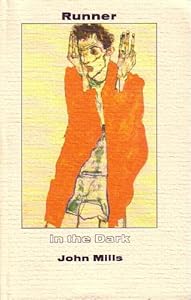
John Mills, author of "Runner in the Dark" is a Vancouverite whose past experiences includes working for the Distant Early warning (DEW) -line as a radar technician.  The DEW-line was built in the late 1950s by the American government as a form of defence during the Cold War .  Its purpose was to detect any signs of an air strike from Europe or Asia that would be detrimental to both Canada and the United States of America.  Radar sites were set up along Northern Canada and Alaska. Technicians like John Mills were responsible for installing the radar machines - a complicated skill. Both Canadians and Americans were recruited to complete the DEW-line.

View more on the DEW-line story here.

Today, the DEW-line is of no use as technology has evolved.  Ironically, Canadians have taken on the task of cleaning up the American project.  Defence Construction Canada (DCC) calls this project "DEW Line Clean Up" in which their goal is to protect the northern environment from contaminants and debris left over from the DEW-line (DCC, 2013).  These would include metal, paint, fuel, batteries, and electrical equipment.  This Canadian crown corporation have used innovative engineering and archeology to create a specific clean up plan that considers all geological factors, like permafrost, terrain, and hydrology (DCC, 2013).  This project is to be finished this year, hopefully restoring the northern environment close to its original state.

View Undoing the DEW.

DCC has used their technology not for defence, but for the protection of land.  Although this clean up is not occurring in Vancouver, it does reflect Vancouver's sustainability.  I believe that Vancouver has taken on this character and has chosen it to be one of its defining traits.  Vancouver is also using technology to restore the environment as close to its original state as possible, as evidenced by the "Greenest City 2020 Project".  This project employs various interventions that will make Vancouver the greenest city in the world by 2020.  Like the DCC's Dew Line Clean Up Project, the Greenest City 2020 Project plans on reducing contaminants to the environment.  For example, new building policies were initiated by the council that would allow new homes to be carbon neutral.  By including certain technology in new homes in Vancouver, the home itself will contribute to the the sustainability of the environment.  One policy that was initiated is that all bulbs in homes must be energy efficient, like compact fluorescents or light emitting diodes (City of Vancouver, 2012).  Click here to view an interactive model of the policy changes made on building regulations in Vancouver.


Sources:

City of Vancouver. “Greenest City 2020: A Bright Green Future.” https://vancouver.ca/green-vancouver/a-bright-green-future.aspx (Vancouver B.C.: City of Vancouver. 16 November 2012)

City of Vancouver. "Green Home Building Policies." https://vancouver.ca/home-property-development/green-home-building-policies.aspx (Vancouver B.C.: City of Vancouver. 19, June 2012)

Defence Construction Canada (2013). "DEW Line Clean-Up." http://www.dcc-cdc.gc.ca/english/pr_dew.html  Last Accessed on July 5, 2013) 

Internet Archive (2001).  "Dew Line Story."  http://archive.org/details/gov.archives.arc.52896 Last accessed on July 5, 2013) 


Wednesday, 19 June 2013

The Innocent Traveller Moves to Vancouver

Canadian Pacific Ry station and general offices at the foot of Granville Street in Vancouver, B.C. Designed by Edward Maxwell, the station opened in 1898.

The first novel our class embarked on was "The Innocent Traveller" by Ethel Wilson.  The novel illustrates different matriarchal figures and their travels - one of which is to Vancouver via the Canadian Pacific Railway (CPR).  The travels of Topaz, Rachel, Mary and Rose show us the modest beginnings of our Terminal City.

The incorporation of the CPR in 1881 brought promise to the provinces of Canada. The railway would link the eastern provinces and central provinces.  In 1871, British Columbia join the other provinces in the confederation on the promise that the railway would also link the east provinces with the west.  This gave Vancouver an opportunity to be a world class city.  The CPR would act as a means of defence, populate the West, and encourage manufacturing.  It was completed in 1885, transporting people and goods across Canada (Canadian Pacific, 2013).

The CPR not only was a form of transport, but it provided our country, and the city of Vancouver with diverse resources and technology.  Telegraph lines were erected along the railway line and used a form of communication in 1882.  The CPR began manufacturing different forms of technology.  Here in British Columbia, the CPR started manufacturing paddle wheelers. Powered by steam, paddle wheelers would was another form of transport for people and goods.  It carried gold seekers, wheat, fruits, missionaries, and mail across the Atlantic Ocean (Barris, 2012).

Today, the CP (what it is now known as) still moves commodities and goods across Canada, but it has evolved in its sustainability.  The CP contributes to Vancouver's unique identity in environmentally friendly technology by striving to be the North American railway industry leader in environmental protection (Canadian Pacific, 2013).  By using innovation and technology, the CP plans to protect the land, air and water for future generations. An example includes the CP's measures to protect the air.  A review was conducted to find the major source of the green house gases (GHG) of the railway in 2012. This review found that 95% of GHG was coming from diesel consumption.  To address this issue, the CP has started initiatives to reduce this consumption through various interventions:

  1. Frequent lubrication of the railway: reduces friction and therefore, fuel consumption
  2. Anti-idling technology policies: locomotives now include the technology to shut off the locomotive in certain conditions rather than idling. 
  3. New locomotives and development of better locomotives: currently, the locomotives being used are built in accordance to the U.S. Environmental Protection Agency.  However, the CP is developing a form of locomotive that will reduce both GHG and criteria air contaminant emissions. 
  4. Fuel conservation team: this team's purpose is to discuss ways in which fuel consumption can be reduced.
These interventions have already shown a reduction in overall fuel consumption (Canadian Pacific, 2013). 

To learn more about initiatives the CP is taking to preserve the quality of the land and water, click here.

The CP has a rich history that has contributed to Vancouver's current identity.  It has given the opportunity for many to settle and prosper in Western Canada. Since Vancouver is a young city made of a mixture of different civilizations, it is still in the process of creating its own unique identity.  It is however, becoming known as a sustainable city.  The CP has shown this to be true with the use of technology and innovation to maintain the quality of our air, land, and water.  

Sources: 

Barris, T. (2012). "Steamboats and Paddle Wheelers". http://www.thecanadianencyclopedia.com/articles/steamboats-and-paddle-wheelers. Last accessed on June 19, 2013. 

Canadian Pacific (2013). "Air Initiatives". http://www.cpr.ca/en/in-your-community/environment/Pages/air-initiatives.aspx. Last accessed on June 19, 2013.

Canadian Pacific (2013). "Environment". http://www.cpr.ca/en/in-your-community/environment/Pages/default.aspx. Last accessed on June 19, 2013. 

Canadian Pacific (2013). "Our History". http://www.cpr.ca/en/about-cp/our-past-present-and-future/Pages/our-history.aspx. Last accessed on June 19, 2013.