Friday, 5 July 2013
Innovative Clean-Up
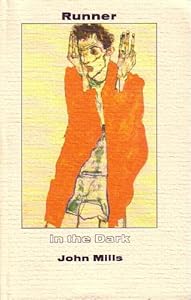
John Mills, author of "Runner in the Dark" is a Vancouverite whose past experiences includes working for the Distant Early warning (DEW) -line as a radar technician. The DEW-line was built in the late 1950s by the American government as a form of defence during the Cold War . Its purpose was to detect any signs of an air strike from Europe or Asia that would be detrimental to both Canada and the United States of America. Radar sites were set up along Northern Canada and Alaska. Technicians like John Mills were responsible for installing the radar machines - a complicated skill. Both Canadians and Americans were recruited to complete the DEW-line.
View more on the DEW-line story here.
Today, the DEW-line is of no use as technology has evolved. Ironically, Canadians have taken on the task of cleaning up the American project. Defence Construction Canada (DCC) calls this project "DEW Line Clean Up" in which their goal is to protect the northern environment from contaminants and debris left over from the DEW-line (DCC, 2013). These would include metal, paint, fuel, batteries, and electrical equipment. This Canadian crown corporation have used innovative engineering and archeology to create a specific clean up plan that considers all geological factors, like permafrost, terrain, and hydrology (DCC, 2013). This project is to be finished this year, hopefully restoring the northern environment close to its original state.
View Undoing the DEW.
DCC has used their technology not for defence, but for the protection of land. Although this clean up is not occurring in Vancouver, it does reflect Vancouver's sustainability. I believe that Vancouver has taken on this character and has chosen it to be one of its defining traits. Vancouver is also using technology to restore the environment as close to its original state as possible, as evidenced by the "Greenest City 2020 Project". This project employs various interventions that will make Vancouver the greenest city in the world by 2020. Like the DCC's Dew Line Clean Up Project, the Greenest City 2020 Project plans on reducing contaminants to the environment. For example, new building policies were initiated by the council that would allow new homes to be carbon neutral. By including certain technology in new homes in Vancouver, the home itself will contribute to the the sustainability of the environment. One policy that was initiated is that all bulbs in homes must be energy efficient, like compact fluorescents or light emitting diodes (City of Vancouver, 2012). Click here to view an interactive model of the policy changes made on building regulations in Vancouver.
Sources:
City of Vancouver. “Greenest City 2020: A Bright Green Future.” https://vancouver.ca/green-vancouver/a-bright-green-future.aspx (Vancouver B.C.: City of Vancouver. 16 November 2012)
City of Vancouver. "Green Home Building Policies." https://vancouver.ca/home-property-development/green-home-building-policies.aspx (Vancouver B.C.: City of Vancouver. 19, June 2012)
Defence Construction Canada (2013). "DEW Line Clean-Up." http://www.dcc-cdc.gc.ca/english/pr_dew.html Last Accessed on July 5, 2013)
Internet Archive (2001). "Dew Line Story." http://archive.org/details/gov.archives.arc.52896 Last accessed on July 5, 2013)
Wednesday, 19 June 2013
The Innocent Traveller Moves to Vancouver
| Canadian Pacific Ry station and general offices at the foot of Granville Street in Vancouver, B.C. Designed by Edward Maxwell, the station opened in 1898. |
The first novel our class embarked on was "The Innocent Traveller" by Ethel Wilson. The novel illustrates different matriarchal figures and their travels - one of which is to Vancouver via the Canadian Pacific Railway (CPR). The travels of Topaz, Rachel, Mary and Rose show us the modest beginnings of our Terminal City.
The incorporation of the CPR in 1881 brought promise to the provinces of Canada. The railway would link the eastern provinces and central provinces. In 1871, British Columbia join the other provinces in the confederation on the promise that the railway would also link the east provinces with the west. This gave Vancouver an opportunity to be a world class city. The CPR would act as a means of defence, populate the West, and encourage manufacturing. It was completed in 1885, transporting people and goods across Canada (Canadian Pacific, 2013).
The CPR not only was a form of transport, but it provided our country, and the city of Vancouver with diverse resources and technology. Telegraph lines were erected along the railway line and used a form of communication in 1882. The CPR began manufacturing different forms of technology. Here in British Columbia, the CPR started manufacturing paddle wheelers. Powered by steam, paddle wheelers would was another form of transport for people and goods. It carried gold seekers, wheat, fruits, missionaries, and mail across the Atlantic Ocean (Barris, 2012).
Today, the CP (what it is now known as) still moves commodities and goods across Canada, but it has evolved in its sustainability. The CP contributes to Vancouver's unique identity in environmentally friendly technology by striving to be the North American railway industry leader in environmental protection (Canadian Pacific, 2013). By using innovation and technology, the CP plans to protect the land, air and water for future generations. An example includes the CP's measures to protect the air. A review was conducted to find the major source of the green house gases (GHG) of the railway in 2012. This review found that 95% of GHG was coming from diesel consumption. To address this issue, the CP has started initiatives to reduce this consumption through various interventions:
- Frequent lubrication of the railway: reduces friction and therefore, fuel consumption
- Anti-idling technology policies: locomotives now include the technology to shut off the locomotive in certain conditions rather than idling.
- New locomotives and development of better locomotives: currently, the locomotives being used are built in accordance to the U.S. Environmental Protection Agency. However, the CP is developing a form of locomotive that will reduce both GHG and criteria air contaminant emissions.
- Fuel conservation team: this team's purpose is to discuss ways in which fuel consumption can be reduced.
These interventions have already shown a reduction in overall fuel consumption (Canadian Pacific, 2013).
To learn more about initiatives the CP is taking to preserve the quality of the land and water, click here.
The CP has a rich history that has contributed to Vancouver's current identity. It has given the opportunity for many to settle and prosper in Western Canada. Since Vancouver is a young city made of a mixture of different civilizations, it is still in the process of creating its own unique identity. It is however, becoming known as a sustainable city. The CP has shown this to be true with the use of technology and innovation to maintain the quality of our air, land, and water.
Sources:
Barris, T. (2012). "Steamboats and Paddle Wheelers". http://www.thecanadianencyclopedia.com/articles/steamboats-and-paddle-wheelers. Last accessed on June 19, 2013.
Canadian Pacific (2013). "Air Initiatives". http://www.cpr.ca/en/in-your-community/environment/Pages/air-initiatives.aspx. Last accessed on June 19, 2013.
Canadian Pacific (2013). "Environment". http://www.cpr.ca/en/in-your-community/environment/Pages/default.aspx. Last accessed on June 19, 2013.
Canadian Pacific (2013). "Our History". http://www.cpr.ca/en/about-cp/our-past-present-and-future/Pages/our-history.aspx. Last accessed on June 19, 2013.
Subscribe to:
Posts (Atom)